

The Credit Score
A credit score represents the creditworthiness of a company or financial institution on a scale from A+ to E. The score serves as an indicator of the likelihood that the borrower will repay their debts. It helps you, as an investor, better understand the borrower’s credit profile before investing.
A score of “A+” or “A” indicates a stronger credit profile, while a score of “E” indicates a weaker credit profile. Lendahand currently only offers loans with a credit score of A+, A, B+, or B.
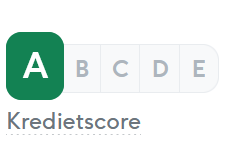
The score is calculated based on credit history, financial indicators, and company performance. The assessment is part of an extensive due diligence and approval process for a (potential) borrower.
Credit Scoring Model
In credit assessment, we use a partially automated credit scoring model consisting of five categories:
- Management
- Borrower Characteristics
- Financial Performance
- Financial Capacity and Performance History
- Macroeconomic Factors
In the credit scoring model, each category is assessed using a series of questions, each scored from 1 to 5. The individual scores are weighted and summed to calculate a total score.This total score determines the project's risk level, which is represented as the credit score (A+ to E) and also influences the interest rate offered. The score is reassessed annually and may also be adjusted in the event of a significant change or development.
Below are some sample questions from the credit scoring model:
- The borrower's revenue model;
- The sector in which the borrower operates and how competitive the borrower is in this sector;
- The macroeconomic environment in which the borrower operates;
- The currency risk;
- The expertise of the management team;
- How the borrower's company is organized (governance);
- The state of internal and external controls within the company;
- Whether it is a regulated company or not;
- Solvency, liquidity, and profitability, both historically and in forecasts;
- The extent to which the borrower has been able to raise additional capital in the past;
- The seniority of the loan compared to other lenders and whether collateral is provided.
- All the aforementioned topics are determined during the introduction process and are part of Lendahand's credit policy. The output of the credit assessment is well documented.
All the aforementioned topics are determined during the introduction process and are part of Lendahand's credit policy. The output of the credit assessment is well documented.